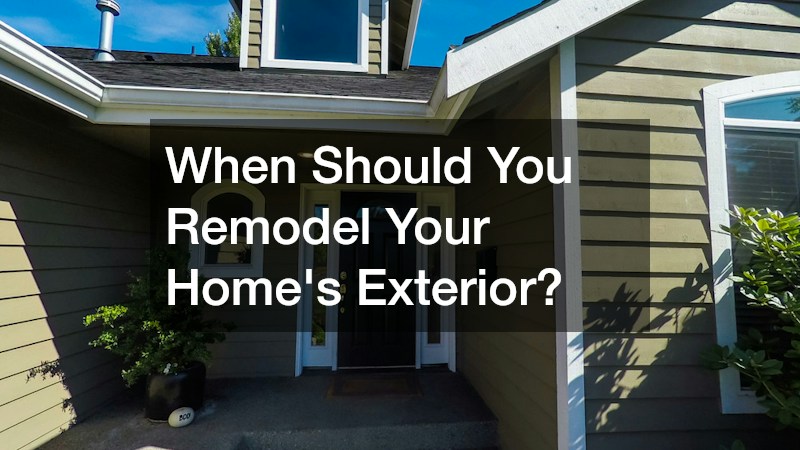
A home’s exterior is constantly exposed to sunlight, wind, rain, snow, temperature changes, falling debris, and other environmental conditions. Over time, even durable materials can begin to show signs of wear. Some exterior changes are primarily cosmetic, but others can indicate that repairs or more extensive remodeling should be considered. Knowing the difference can help homeowners address problems before they spread.
There is no single age at which every home needs an exterior remodel. The appropriate timing depends on the materials used, local weather, previous maintenance, installation quality, and the condition of individual components. One homeowner may need to replace windows while the roof remains in excellent condition, while another may need roofing and drainage improvements before considering aesthetic upgrades.
The best approach is to periodically evaluate the exterior as a complete system. Roofing, gutters, windows, doors, lighting, landscaping, and trees all influence how the property looks and functions. When several areas are deteriorating simultaneously, coordinating improvements may also be more practical than completing isolated projects over many years.
By recognizing warning signs and prioritizing projects strategically, homeowners can create an exterior remodeling plan that improves curb appeal while protecting the property from avoidable damage.
Recognize the Signs That Your Roof Needs Attention

The roof is one of the first places to consider when deciding whether exterior remodeling is necessary. It protects the structure from weather and moisture, so roofing problems can eventually affect ceilings, walls, insulation, and other parts of the home.
Professional residential roofing contractors can evaluate shingles or other surface materials, flashing, valleys, penetrations, ventilation components, and visible structural conditions. Homeowners should pay attention to missing materials, cracked or curling shingles, exposed areas, damaged flashing, sagging sections, or repeated leaks.
Interior warning signs can be equally important. Water stains on ceilings, damp attic materials, musty odors, or unexplained moisture may indicate a problem that is not obvious from the ground.
Age should be considered alongside condition rather than used as the only reason for replacement. Weather exposure, material type, installation quality, ventilation, and previous maintenance can all influence how a roof performs over time.
If exterior remodeling will involve siding, gutters, additions, or other significant work, evaluating the roof first can help homeowners determine the most logical sequence for the entire project.
Address Minor Exterior Damage Before It Spreads
Not every sign of exterior deterioration requires a complete replacement. Localized problems can sometimes be repaired effectively when homeowners identify them early enough. The important step is determining whether visible damage is truly isolated or evidence of a larger issue.
A professional roof repair service can investigate concerns such as a small leak, damaged shingles, flashing problems, or deterioration around roof penetrations. Prompt repairs may help prevent water from reaching decking, insulation, drywall, and other materials.
The same principle applies elsewhere on the exterior. Cracked siding, damaged trim, deteriorated caulk, loose materials, and small areas of rot should not automatically be dismissed as cosmetic imperfections. Exterior surfaces form barriers against moisture and weather, and gaps in those barriers can allow deterioration to progress.
Homeowners can periodically walk around the property from safe ground-level locations and look for visible changes. Comparing current conditions with older photographs can sometimes make gradual deterioration easier to recognize.
Addressing smaller problems early can extend the usefulness of existing materials and give homeowners more flexibility when planning larger remodeling projects instead of forcing them into emergency repairs.
Upgrade Drainage Systems When Water Control Becomes a Problem

A functioning drainage system protects several parts of the property simultaneously. Gutters collect water from the roof and direct it through downspouts, helping prevent uncontrolled runoff around siding, landscaping, walkways, and the foundation.
Professional gutter companies can evaluate systems that repeatedly overflow, sag, leak, or fail to direct water effectively. Older gutters may have deteriorated connections, corrosion, inadequate capacity, or improper slopes that interfere with drainage.
Downspout placement matters as well. Moving water off the roof is only the first step. That water must then be directed to an appropriate location rather than allowed to collect immediately beside the house.
Homeowners planning an exterior remodel can coordinate gutter materials and finishes with roofing, siding, trim, and other visible features. This can make drainage upgrades part of the overall design instead of treating them exclusively as functional additions.
If water consistently appears in places where it should not, homeowners should investigate the cause. Drainage problems can affect landscaping and exterior materials while potentially contributing to more significant moisture concerns. Upgrading an inadequate system can therefore improve both appearance and protection.
Replace Aging Windows to Improve Comfort and Appearance
Windows are major architectural features, so deterioration can influence both the exterior appearance and interior comfort of a home. Older windows may develop damaged frames, deteriorated seals, operational problems, drafts, or other issues that make replacement worth considering.
Professional window services can evaluate whether specific problems can be repaired or whether replacement is more appropriate. Homeowners should pay attention to windows that are difficult to open or close, show visible deterioration, allow noticeable drafts, or repeatedly develop moisture-related problems.
Appearance is another consideration. Windows occupy significant portions of many exterior walls, and outdated styles can affect the overall look of a renovated façade. Replacement creates an opportunity to coordinate frame colors, grille patterns, trim, and proportions with other exterior improvements.
Homeowners should consider function before making decisions based entirely on aesthetics. Window size, ventilation needs, maintenance requirements, durability, and installation quality all matter.
When siding or other wall work is already planned, coordinating window projects may simplify certain aspects of construction and help create a more cohesive finished exterior.
Keep Water Flowing Properly With Routine Exterior Maintenance

Replacing gutters is not always necessary when drainage problems appear. Sometimes a system simply needs cleaning or maintenance to restore normal water flow. Leaves, seeds, branches, dirt, and other debris can gradually accumulate and create blockages.
A professional gutter cleaning service can remove material that prevents water from moving through gutters and downspouts. Properties surrounded by mature trees may require more frequent attention, particularly during seasons when large amounts of organic debris fall onto the roof.
Homeowners can observe gutters during rainfall from a safe location. Water spilling over the sides, unusual drainage patterns, sagging sections, or downspouts producing little water despite heavy rain may indicate a blockage or another problem.
Cleaning also provides an opportunity to identify visible deterioration. Loose fasteners, leaking joints, damaged sections, and downspout problems can be easier to recognize once debris has been removed.
Routine maintenance can help homeowners avoid replacing components that remain serviceable. It also supports the rest of an exterior remodel by helping keep water away from newly painted surfaces, landscaping, siding, and other improvements.
Improve Curb Appeal With Better Outdoor Illumination
Exterior remodeling is not limited to replacing worn materials. It can also involve improving how the property looks and functions. Lighting is one feature capable of changing the appearance of a home without altering its fundamental architecture.
A house lighting upgrade can improve visibility around entryways, walkways, patios, driveways, and other frequently used areas. Accent fixtures can also highlight architectural details, landscaping, trees, or exterior textures after sunset.
The goal should be balanced illumination rather than maximum brightness. Excessively bright fixtures or poorly aimed lights can create glare and make outdoor spaces less comfortable. Thoughtful placement can define important areas while maintaining a welcoming appearance.
Fixture style also deserves attention. Old or mismatched lights can make a recently renovated exterior feel incomplete. Selecting fixtures that complement doors, hardware, trim, and architectural features can create a more coordinated design.
Homeowners should also evaluate whether existing electrical connections are appropriate for planned improvements. Larger lighting projects may require professional electrical work, particularly when new wiring or circuits are involved.
Refresh Outdoor Spaces With Updated Materials and Features

Landscaping contributes significantly to the way an exterior renovation comes together. New siding, roofing, doors, or windows may have less visual impact if surrounding outdoor areas remain overgrown or deteriorated.
Choosing the right landscape supply materials can help homeowners refresh planting beds, pathways, borders, drainage areas, and other outdoor features. Mulch, stone, soil, edging, gravel, and related materials can define spaces and create a cleaner transition between the house and yard.
Before purchasing materials, homeowners should develop a plan for how outdoor areas will function. A decorative bed may require different preparation than a walkway or drainage feature. Material quantities, maintenance needs, weather exposure, and compatibility with the surrounding landscape should all be considered.
Landscaping should also work with the home’s drainage strategy. Adding materials without considering how water moves through the property can create unintended problems.
Exterior remodeling offers an opportunity to simplify outdoor spaces as well. Removing worn materials, redefining planting areas, and creating consistent borders may provide a cleaner appearance without requiring an elaborate landscape redesign.
Plan Major Exterior Work Around the Condition of the Roof
Large exterior projects often overlap. Siding, gutters, trim, rooflines, additions, windows, and other components may connect physically or affect the order in which contractors need to work. For that reason, homeowners should develop a coordinated plan before starting construction.
Professional roofing contractors can help determine whether roof work should occur before, during, or after other exterior improvements. If the roof is approaching the end of its useful life, completing certain surrounding projects first could result in duplicated labor later.
For example, gutters may need to be removed or adjusted during roofing work. Flashing can interact with siding and wall transitions. An addition may require connecting new roofing materials to the existing system. Understanding these relationships beforehand can prevent recently completed work from being disturbed.
Homeowners should share the complete remodeling plan with each contractor rather than discussing only one isolated project. This allows professionals to identify areas where sequencing or coordination matters.
A clear schedule is especially useful when multiple companies are involved. Establishing responsibilities and timing can make a complex exterior renovation easier to manage.
Replace Worn Entry Features to Improve Access and Efficiency
Doors connect interior and exterior spaces while contributing significantly to a home’s appearance. Patio entrances in particular may experience frequent use, weather exposure, and gradual deterioration.
Installing new patio doors may be appropriate when existing doors become difficult to operate, develop damaged frames, no longer seal properly, or simply do not function well for the household. Replacement can also provide an opportunity to introduce more natural light or create a stronger visual connection between indoor and outdoor living areas.
Homeowners should consider more than appearance when selecting doors. Operation style, available wall space, durability, glass options, maintenance requirements, security features, and energy performance can all influence the decision.
Proper installation is essential because even a high-quality door may perform poorly if the opening is not prepared correctly. Water management around exterior openings should also receive careful attention.
When patio improvements, siding work, or other exterior renovations are already planned, coordinating door replacement can help create a more consistent design and reduce the need to disturb surrounding finishes later.
Remove Hazardous Trees Before They Damage the Property
Trees can add shade, character, and visual interest to a property, but damaged or unstable trees can also threaten exterior improvements. Large branches over roofs, driveways, patios, or other structures deserve particular attention.
Professional reliable tree removal may become necessary when a tree is severely damaged, dead, structurally unstable, or located where failure could cause significant property damage. Homeowners should watch for large dead branches, visible decay, substantial leaning, trunk damage, exposed roots, or major changes in the canopy.
Tree conditions are particularly important to evaluate before beginning an exterior remodel. Installing a new roof or creating an expensive outdoor living area beneath a visibly compromised tree can expose those improvements to avoidable risk.
Removal is not always the appropriate solution. Depending on the condition of the tree, pruning or other professional care may address the concern while preserving a healthy landscape feature.
Homeowners should avoid attempting to remove large trees or branches themselves. Work near buildings, utility lines, or other structures can involve substantial hazards and generally requires appropriate equipment and experience.
Deciding when to remodel a home’s exterior requires looking beyond appearance. Faded finishes and outdated features may inspire a renovation, but structural protection, drainage, weather resistance, and safety should influence which projects receive priority.
The process can begin with a careful assessment of the property. Roofing problems, uncontrolled water, deteriorated windows, damaged doors, clogged gutters, and hazardous trees may need attention before purely decorative improvements. Correcting these issues first creates a stronger foundation for lighting, landscaping, and other projects designed primarily to enhance curb appeal.
Homeowners should also think about how different exterior systems interact. Roofs connect with gutters and flashing. Windows and doors interact with siding and water barriers. Landscaping affects drainage, while trees can influence roofs, gutters, and outdoor structures. Treating these features as parts of one exterior system can make project planning more efficient.
A remodel does not have to involve replacing everything at once. In many cases, routine maintenance and localized repairs can extend the life of existing components. Larger replacements can then be scheduled when materials are genuinely deteriorated or when coordinating several projects makes practical sense.
Ultimately, the right time to remodel is when the existing exterior no longer adequately meets the home’s needs, whether because of deterioration, poor performance, safety concerns, or outdated functionality. By monitoring the property, responding to warning signs, and coordinating major projects carefully, homeowners can create an exterior that looks refreshed while continuing to protect the home for years to come.