
Maintaining a home requires constant vigilance over the structural and mechanical systems that form your building envelope. From the highest roof ridge down to the sub-grade concrete foundation walls, every layer of your home functions as an interconnected protective shield. When weather extremes, thermal movement, and age begin to compromise individual components, moisture infiltration and energy loss quickly follow. Identifying minor surface wear early prevents compounding structural decay, safeguards interior living spaces, and preserves overall property equity.
A proactive inspection routine shifts property management away from sudden, stress-filled emergency repairs toward predictable, budget-friendly upkeep. Many homeowners overlook subtle shifts in building materials—such as hairline masonry cracks, slightly lifted shingles, or minor ductwork air leaks—until interior ceiling water stains or skyrocketing utility bills make the problem impossible to ignore. Water follows complex paths inside wall cavities, saturating insulation, rotting wooden studs, and cultivating hidden mold long before damage manifests on interior drywall. Conducting thorough seasonal assessments protects structural integrity and ensures high mechanical efficiency.
Protecting your property envelope depends on selecting high-grade building materials and partnering with accredited field specialists across specialized trades. Coordinating roof evaluations, wall cladding audits, climate equipment tune-ups, and subterranean waterproofing guarantees that every defense layer performs flawlessly. A disciplined, top-to-bottom property inspection plan safeguards your family, stabilizes monthly operating costs, and delivers multi-decade structural durability.
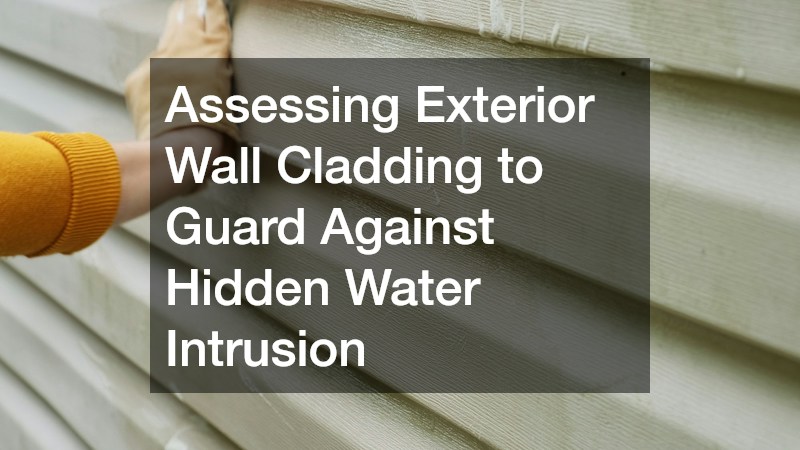
Assessing Exterior Wall Cladding to Guard Against Hidden Water Intrusion
Siding serves as your home’s primary vertical barrier, shielding underlying wall sheathing and wood framing from wind-driven rain, UV exposure, and impact damage. Over time, seasonal temperature fluctuations cause vinyl, fiber cement, or wood cladding panels to expand and contract. This continuous movement can loosen trim fasteners, break caulking seals around window frames, and create subtle gaps where moisture can seep behind wall surfaces during heavy storms.
Partnering with accredited local siding contractors ensures that your exterior wall cladding is thoroughly audited for warped panels, cracked corner posts, and failing perimeter weather barriers. Skilled cladding specialists inspect flashing details around window sills and door frames, verifying that drainage planes behind the siding operate correctly. Addressing minor cladding vulnerabilities early stops hidden water intrusion before wood rot damages structural wall studs or degrades cavity insulation.
Working with experienced wall cladding experts keeps your building envelope completely watertight while preserving crisp exterior aesthetic lines. Professional inspections reveal hidden moisture accumulation behind panels using non-invasive moisture meters, allowing for targeted spot fixes rather than costly full-wall tear-offs. Comprehensive wall maintenance extends cladding lifespan and supports long-term property valuation.
Evaluating Overhead Assemblies to Spot Subtle Weather Wear Early
Your roof bears the direct burden of extreme environmental exposure, enduring intense summer heat, ice dams, heavy snow loads, and high winds. Over years of service, asphalt shingles naturally lose their mineral granule coating, becoming brittle, curled, and prone to wind uplift. Evaluating overhead slopes requires trained eye assessments to detect missing shingle tabs, rusted flashing valleys, and cracked plumbing boot seals before rainwater breaches your attic.
Hiring certified roofing contractors provides homeowners with detailed overhead evaluations that measure shingle flexibility, decking stability, and attic ventilation performance. Professional contractors assess vulnerable roof intersections—such as chimney counter-flashing, dormer step-flashing, and skylight perimeters—where water pooling most frequently occurs. Their systematic evaluations identify hidden storm impact marks and underlayment wear long before active ceiling drips appear inside your living space.
Collaborating with established overhead contractors preserves your home’s structural framing and ensures all manufacturer material warranties remain valid. Thorough inspection reports provide necessary documentation when filing insurance claims after severe hail or windstorms. Professional overhead care keeps your primary weather shield rigid, secure, and weather-ready.
Securing Certified Field Specialists for Precision Shingle and Flashing Care
Residential roofs feature steep pitches, complex gables, and delicate valley configurations that require specialized installation and repair techniques. Standard weathering patterns, combined with seasonal freeze-thaw cycles, can dislodge individual shingles and compromise ice and water shield membranes along eaves. Resolving these issues demands field craftsmen who understand proper fastener placement, underlayment overlap rules, and regional building code standards.
Relying on a qualified residential roofer guarantees that delicate repair work—from replacing broken architectural shingles to custom-fitting copper chimney flashing—is executed according to strict trade standards. Certified technicians check ridge vent exhaust pathways to ensure proper attic ventilation, preventing heat accumulation that accelerates shingle decay from underneath. Their precise craftsmanship restores the watertight boundary across all roof slopes.
Working with dedicated residential specialists eliminates personal safety hazards associated with climbing steep ladders and walking high-pitch roofs. Trained field technicians carry specialized safety harnesses and diagnostic tools to execute spot repairs neatly without damaging surrounding shingles. Expert technical care preserves clean architectural rooflines while keeping interior ceilings completely dry.
Upgrading Low-Slope Drainage Membranes to Eliminate Standing Water
Flat and low-slope roof sections on additions, porches, or modern architectural homes present unique water shedding challenges. Unlike traditional steep-pitched roofs that rely on gravity to shed water quickly, flat roofing assemblies depend on continuous, seamless membranes to resist standing water. Over time, UV radiation, ponding water, and foot traffic can degrade membrane seams, causing subtle tears that allow water to saturate underlying insulation boards.
Scheduling complete flat roof replacements replaces deteriorated built-up asphalt or aged rubber systems with modern single-ply TPO or EPDM synthetic membranes. Experienced flat roof technicians install high-density insulation boards tapered toward drain outlets, ensuring that rainwater drains off the roof surface smoothly within twenty-four hours of a storm. Heat-welded membrane seams create a monolithic, watertight barrier that completely eliminates leak hazards over low-slope living areas.
Upgrading aging flat roof assemblies drastically reduces ongoing maintenance needs while improving upper-level thermal insulation values. Modern light-colored membrane materials reflect solar radiation, significantly reducing interior cooling loads during hot summer months. Professional installation transforms vulnerable low-slope sections into highly durable, weather-resistant structural features.
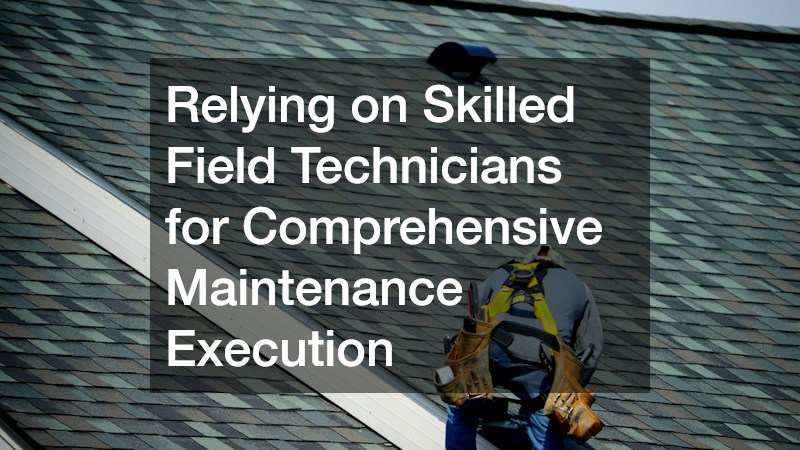
Relying on Skilled Field Technicians for Comprehensive Maintenance Execution
Installing or restoring a multi-layer roofing assembly involves assembling a complex weather defense system that includes drip edges, synthetic underlayment, starter strips, field shingles, and ridge caps. Every fastener must be driven to exact depth tolerances, and every underlayment course must maintain proper overlap dimensions to prevent wind-driven rain from backing up under the primary shingle layer during severe storms.
Relying on seasoned roofers ensures that every physical layer of your roof assembly is installed with technical precision and exact alignment. Experienced field technicians understand how to navigate complex roof penetrations, pipe boots, and roof-to-wall transitions where water flow concentrates during heavy downpours. Their practical trade expertise guarantees that high-wind resistance ratings are achieved across every square foot of your roof slope.
Partnering with skilled field craftsmen protects your building envelope against premature failure and severe storm damage. Precise shingle staggering creates uniform shadow lines that enhance overhead visual texture across your home’s facade. Dedicated field craftsmanship delivers complete peace of mind through every season of harsh weather.
Partnering with Accredited Repair Enterprises for Active Leak Remediation
When a sudden windstorm dislodges shingles or falling tree branches puncture underlying roof decking, water quickly penetrates interior living areas. Allowing rainwater to seep into attic insulation causes rapid thermal loss, damages ceiling drywall, and encourages mold spore growth inside hidden wall cavities. Halting active water intrusion requires immediate technical response from an organized repair enterprise.
Consulting a specialized roof repair company provides rapid diagnostic assistance, emergency tarping services, and permanent structural repairs. Experienced repair crews locate the precise point of water entry—which often originates feet away from where water manifests on interior ceilings—and install matching replacement materials cleanly. Their rapid technical intervention restores the watertight seal of your roof without the unnecessary expense of a full system replacement.
Working with an organized repair enterprise stops structural decay at the source, saving thousands of dollars in secondary interior restoration costs. Professional technicians inspect surrounding decking for hidden rot before applying new underlayment and shingles, ensuring the repair holds up over the long term. Timely repair service preserves your roof’s integrity and protects your indoor living environment.
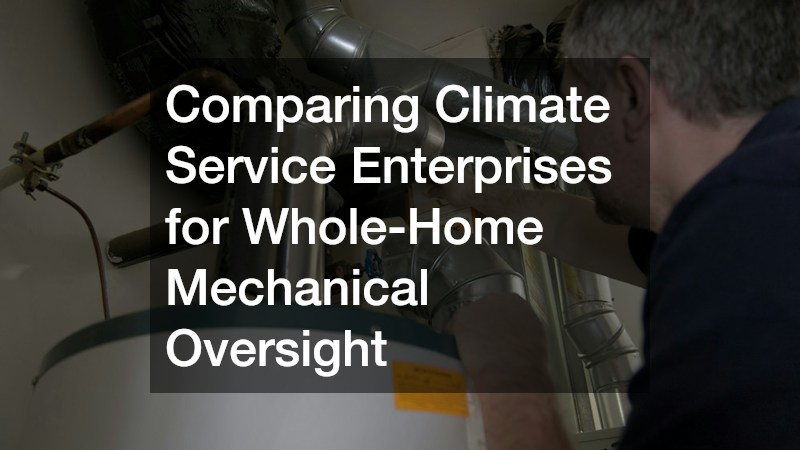
Comparing Climate Service Enterprises for Whole-Home Mechanical Oversight
Maintaining a healthy, energy-efficient interior environment requires managing climate control equipment that regulates indoor temperature, humidity, and airflow year-round. Heating and cooling systems contain complex electrical motors, electronic control boards, refrigerant lines, and air filtration channels that require regular technical recalibration to maintain peak engineered efficiency.
Evaluating top HVAC companies allows homeowners to compare preventative maintenance plans, service guarantees, and technician certification standards before signing annual maintenance contracts. Reputable service providers utilize digital airflow meters, combustion analyzers, and infrared cameras to assess system performance metrics thoroughly. Establishing a formal service agreement ensures that your heating and cooling equipment receives bi-annual tune-ups before peak summer and winter weather arrives.
Partnering with established climate service enterprises extends equipment operational lifespans while optimizing monthly electricity and natural gas consumption. Structured maintenance checks catch failing capacitors, dirty coils, and loose electrical connections before they cause complete system shutdowns. Professional mechanical oversight keeps your home comfortable, safe, and energy-efficient year-round.
Hiring Licensed Mechanical Specialists for Seasonal System Tune-Ups
Modern high-efficiency furnaces, heat pumps, and central air conditioners rely on precise fuel-to-air ratios, exact refrigerant charges, and unrestricted duct airflow to operate at peak efficiency ratings. When burner assemblies become coated with carbon or cooling coils collect dust, equipment efficiency plunges, driving up monthly utility bills and placing severe mechanical strain on compressor motors and blowers.
Collaborating with licensed HVAC contractors ensures that your seasonal maintenance checks are conducted by trained technicians who follow strict trade protocols. Certified contractors clean burner nozzles, inspect heat exchangers for hairline cracks, measure refrigerant subcooling levels, and calibrate digital thermostats for precise temperature control. Their technical adjustments eliminate short-cycling issues and optimize energy transfer across all heating and cooling cycles.
Relying on licensed mechanical contractors safeguards your family against dangerous carbon monoxide leaks and electrical fire risks. Regular professional servicing preserves manufacturer warranty coverage on major system components like compressors and heat exchangers. Expert technical management keeps your climate infrastructure running smoothly and efficiently.
Optimizing Heating and Cooling Efficiency for Lower Utility Expenses
Consistent indoor thermal comfort depends on maintaining smooth, unobstructed airflow throughout your home’s ductwork branches and air handlers. Clogged filters, leaking duct joints, or failing blower fans force climate systems to run longer, continuous cycles to satisfy thermostat settings, wasting energy and accelerating wear on internal bearings and relays.
Booking comprehensive HVAC services resolves airflow bottlenecks, seals uninsulated duct joints, and clears condensate drain lines to prevent system overflows. Professional technicians flush cooling coils, test system safety switches, and adjust blower motor speeds to match your home’s specific thermal load profile. Restoring proper system balance lowers monthly utility bills while ensuring even temperature distribution across every room.
Routine mechanical optimization protects delicate electronic controls from overheating and prevents sudden breakdown during extreme heatwaves or winter freezes. Keeping heating and cooling components clean and properly adjusted optimizes indoor air filtration, removing dust, pollen, and airborne debris from living areas. Proactive mechanical care protects your utility budget and maintains a healthy indoor home environment.
Sealing Foundation Masonry to Eliminate Subterranean Seepage
The concrete foundation supports your home’s entire weight while resisting constant moisture pressure from surrounding soil. During heavy rainstorms or spring snowmelts, groundwater accumulates around foundation footings, creating hydrostatic pressure that forces water through subtle concrete pores, tie-rod holes, and floor joints into basement spaces. Damp basements ruin subflooring, foster mold growth, and weaken foundation strength over time.
Hiring a professional basement waterproofing company provides homeowners with comprehensive subterranean drainage and masonry sealing solutions. Waterproofing specialists install exterior drainage membranes, interior perimeter French drains, high-capacity sump pump systems, and elastomeric wall coatings that divert groundwater away from your foundation footings. Sealing concrete fractures stops water seepage permanently, transforming damp lower levels into dry, usable living or storage spaces.
A disciplined property inspection strategy unites structural exterior maintenance, mechanical optimization, and subterranean water management into a single, high-yield protection plan. Refreshing key defense layers—from auditing wall cladding and securing an airtight roofing assembly to optimizing climate controls and sealing foundation masonry—creates a continuous, high-performance building envelope. At the same time, maintaining tight weather seals prevents hidden structural wood rot, eliminates energy-wasting thermal drafts, and stabilizes monthly utility expenses.
By prioritizing preventative assessments and partnering with accredited field specialists, property owners ensure that every home system performs reliably through changing seasonal conditions. Ultimately, a proactive approach to house upkeep transforms an aging property into a dry, energy-efficient, and structurally sound sanctuary that shields your financial equity and delivers lasting peace of mind for decades to come.