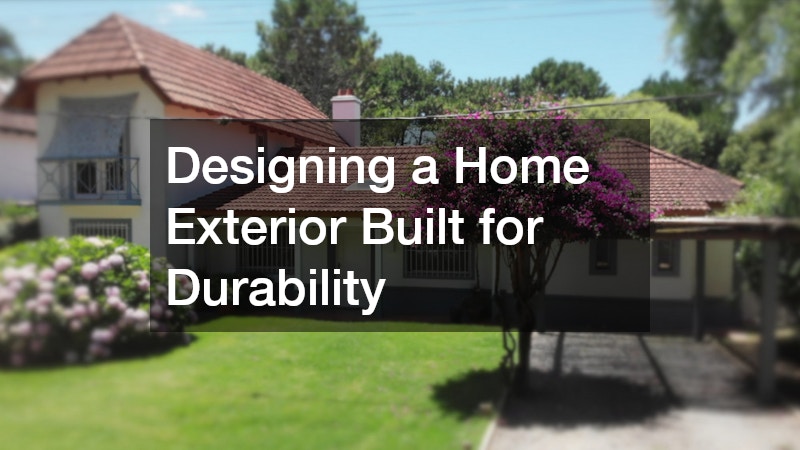
Your home’s exterior is more than a visual introduction; it is a complex, multi-layered shield protecting your family from nature’s forces. The materials and structural methods you choose determine how well your home will age. Many homeowners focus on interior finishes like quartz countertops, overlooking the importance of exterior materials. Wrong choices or lack of preparation can lead to failures in a decade. Moisture intrusion, wood rot, foundation settling, and material degradation can be avoided with careful planning. Designing a long-lasting exterior means focusing on engineered resilience, not temporary trends. Prioritize robust water management, specify high-performance cladding, and work with infrastructure experts to create a beautiful, low-maintenance home that retains structural integrity.
Groundwork First: Grading, Drainage, and Foundation Protection
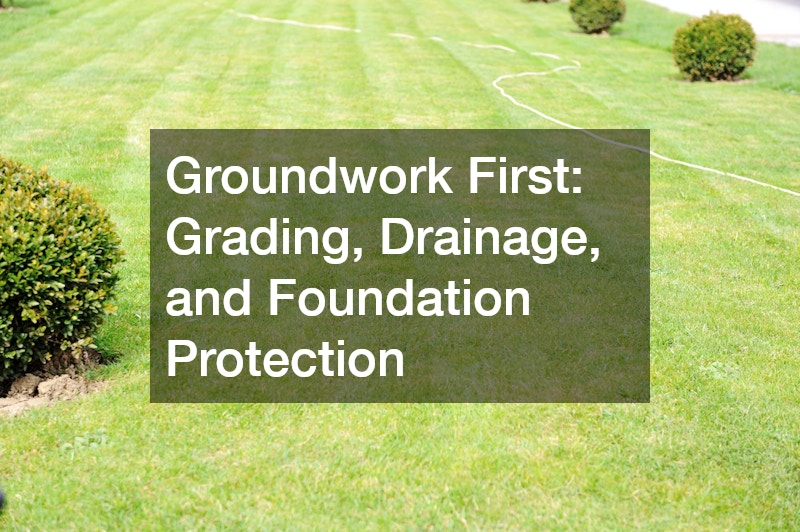
Every durable home exterior is built on a foundation of flawless water management. If water is allowed to pool near your home’s perimeter, it will eventually find a path inside, degrading concrete footings, cracking foundation walls, and triggering toxic mold growth in crawlspaces or basements. Long-term structural integrity begins with controlling how water flows across your property.
Achieving a proper slope away from the structure is your absolute first line of defense against groundwater issues. Soil naturally settles over time, meaning a grading plan that worked when the home was built might be failing today. Homeowners must actively manage the topography of their land to prevent hydrostatic pressure from forcing moisture through porous concrete foundation walls.
- Establish a strict slope ratio: Ensure the soil slopes down and away from your foundation at a minimum drop of six inches over the first ten feet. This five percent slope ensures that sheet flow from heavy rains is rapidly directed into open lawn spaces or drainage channels rather than collecting at the base of your walls.
- Upgrade to oversized gutters: Replace standard five-inch residential gutters with seamless six-inch aluminum or copper alternatives. Pair these with oversized four-inch downspouts to ensure your roofing system can handle torrential downpours without overflowing into your landscaping.
- Implement strategic underground drainage: Connect downspouts directly to solid PVC subterranean drain pipes that carry water at least fifteen feet away from the house, discharging it into a dry well, rain garden, or the municipal storm system. Avoid flexible corrugated piping, which easily clogs with leaves and collapses under pressure.
- Utilize French drains for low spots: If your yard features natural low-lying areas where water naturally collects, install a French drain. This involves digging a trench, lining it with filter fabric, laying a perforated pipe wrapped in gravel, and backfilling it to divert subsurface water away from critical walkways.
Achieving this level of hydrological protection requires a macro view of your property’s entire ecosystem. Working closely with professional landscape designers allows you to select native vegetation that stabilizes the soil while altering the contours of your yard to shed water safely. Furthermore, hiring qualified hardscape contractors to install structurally sound retaining walls, gravel pathways, and permeable patios ensures that your hard surfaces assist in water mitigation rather than aggravating runoff problems.
Choosing Wall Cladding and Masonry That Stand the Test of Time
Once your ground drainage is secure, your focus must shift to the home’s primary vertical shield: the siding and masonry. Your walls face constant exposure to driving wind, baking sunlight, and freeze-thaw cycles. Selecting cladding materials that offer superior impact resistance and thermal stability is critical to keeping the underlying wood framing dry and rot-free.
While traditional wood siding offers a classic aesthetic, it demands constant scraping, painting, and sealing to prevent rot and termite damage. Modern engineered materials deliver the same beautiful shadow lines with a fraction of the upkeep. However, even the highest-grade siding will fail if it is pinned directly against a flat wall without a proper path for moisture to escape.
- Prioritize fiber cement or engineered wood: Choose fiber cement or engineered wood composites over standard vinyl siding. Vinyl expands and contracts drastically with temperature swings, becomes brittle in freezing weather, and can melt if exposed to intense reflected sunlight from nearby modern windows. Fiber cement is non-combustible, dimensionally stable, and completely impervious to pests.
- Insist on a rainscreen system: When installing new cladding, require the installation of a rainscreen system. This involves fixing vertical furring strips over a high-quality weather-resistant barrier before attaching the siding. The resulting air gap allows any moisture that bypasses the siding to drain downward and evaporate quickly via convective airflow.
- Maintain strict ground clearances: Ensure your siding terminates at least six inches above the finished soil line and two inches above roof intersections or decks. This prevents the bottom edges of your cladding from wicking up standing water or melting snow.
For homes utilizing brick, stone, or stucco accents, the primary vulnerability lies within the mortar joints rather than the masonry units themselves. Over several decades, rain, wind, and seismic shifts cause mortar to weaken, turn powdery, and crack. When this happens, water enters the wall assembly, freezes, and causes the face of the bricks to break away entirely. Relying on specialized siding services for seamless flashing and weatherproofing installation protects your home’s transition points from moisture traps. For stone and brick structures, investing in professional tuckpointing services replaces compromised, failing mortar with flexible, historically compatible blends that match the compressive strength of your specific masonry, ensuring the walls remain solid for another half-century.
Designing Resilient Driveways, Walkways, and Garage Floors
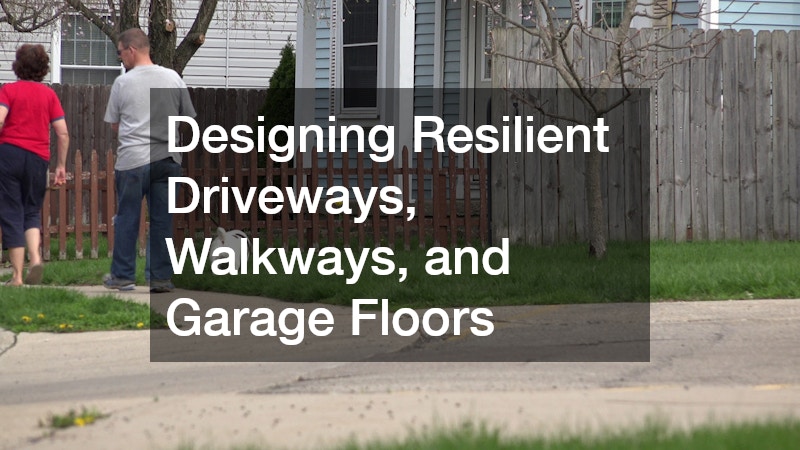
The horizontal concrete and asphalt surfaces surrounding your home bear the dual brunt of heavy vehicular loads and direct environmental exposure. Driveways, walkways, and attached garage floors are highly susceptible to cracking, spalling, and settling if the ground beneath them is poorly prepared or if the surfaces are left unprotected against the elements.
The secret to a flat surface that lasts for decades lies completely out of sight. A concrete slab is only as stable as the soil bed it rests upon. When water gets underneath concrete and freezes, it expands with incredible force, lifting the slab unevenly. When the ice melts, a void is left behind, causing the concrete to crack under the weight of a standard vehicle.
- Insist on a deep compacted aggregate base: Never allow concrete or asphalt to be poured directly over raw topsoil. Specify a base layer of at least four to six inches of crushed, angular stone aggregate. This base must be mechanically compacted to provide a rigid foundation that promotes rapid sub-surface drainage.
- Cut deep control joints: Concrete will always crack as it shrinks during the curing process. Control joints must be cut into the fresh slab at a depth equal to one-quarter of the total slab thickness. Space these joints no further apart than ten feet to ensure cracks happen cleanly along these pre-determined lines instead of snaking across the visible surface.
- Apply penetrating silane-siloxane sealers: Protect exposed outdoor concrete from winter salt and chemical damage by applying a high-quality silane-siloxane sealer. This chemical compound penetrates deep into the pores of the concrete, creating a hydrophobic barrier that repels liquid water while allowing water vapor to escape.
To avoid premature surface scaling and unmanageable cracking, homeowners must consult with reliable paving contractors who understand regional frost depths and concrete mix designs tailored for northern freezes or southern heat. Once your heavy exterior driveway and walkways are poured and stabilized, don’t overlook attached garage structures or covered breezeways. Applying a multi-layer polyaspartic or industrial epoxy concrete floor coating to these indoor-outdoor utility zones completely seals the porous concrete against tracking moisture, road salt, automotive fluids, and hot-tire delamination, keeping the floor clean and structurally sound.
Securing the Perimeter and Managing Large Vegetation

A resilient home exterior cannot be viewed in isolation from the living landscape surrounding it. Mature trees and clear property boundaries add immense beauty, shade, and privacy to a property, but they also present significant structural risks if they are neglected or improperly managed. High winds, aggressive root systems, and old age can turn beautiful yard features into serious liabilities.
Unmanaged trees can act like giant crowbars against your home during severe weather. Overhanging branches drop acidic leaves directly onto your roof shingles, trapping moisture and promoting algae growth that eats away at asphalt granules. During high-wind events, those same heavy branches can break and puncture your roof deck, causing instant, catastrophic water damage to your interior spaces.
- Enforce a structural clearance zone: Maintain a minimum ten-foot clear canopy buffer between the tips of your tree branches and any part of your roofline or siding. This completely eliminates physical wind-scraping damage and keeps small animals from accessing your attic space.
- Plant with mature root spread in mind: Before planting new trees, research their mature size and root behavior. Keep aggressive root-growing species, such as weeping willows or silver maples, at least thirty feet away from underground sewer laterals, water lines, and concrete foundation walls to prevent lifting and pipe intrusion.
- Inspect root flares for girdling: Keep an eye on the base of large trees near your driveways or walkways. Roots that wrap tightly around the base of the trunk can choke the tree over time, making it structurally unstable and prone to falling unexpectedly during a storm.
Proactive botanical care is non-negotiable for a home built to last. Partnering with professional tree companies for annual safety prunings removes weak deadwood, thins out heavy canopies to reduce wind resistance, and catches internal fungal diseases before a tree becomes an immediate falling hazard. When it comes to securing your property lines against high winds and soil erosion, consulting with certified fence companies allows you to install heavy-duty vinyl, composite, or commercial-grade wood barriers that feature reinforced posts capable of standing perfectly straight through decades of harsh weather.
Safe, Durable Outdoor Living and Exterior Utilities

The modern home exterior often includes extensive outdoor living spaces, such as kitchens, gathering spaces, and complex lighting layouts. While these features make our homes highly functional, extending utilities outside exposes vulnerable systems to constant moisture, temperature extremes, and physical impact. Building for durability means completely weatherproofing these elements.
Outdoor electrical systems are particularly vulnerable to environmental degradation. Sunlight degrades standard wire insulation, making it brittle and prone to short-circuiting, while moisture can easily travel along lines into your main home panel if connections are not sealed. Every exterior luxury feature must be designed with industrial-grade safety margins to handle both sub-zero winters and blazing summers.
- Run all wires inside buried conduit: Never permit direct-burial electrical cables to be laid loose in your soil for primary exterior runs. All outdoor wiring should be pulled through thick schedule forty PVC conduit buried at least eighteen inches deep to safeguard the circuit from accidental spade punctures during future gardening projects.
- Install heavy-duty in-use bubble covers: Standard metal flip-lids only protect electrical outlets when nothing is plugged into them. Upgrade all exterior outlets to impact-resistant, clear plastic while-in-use bubble covers, ensuring the outlet remains completely dry even when cords are plugged in for patio lighting or sound systems.
- Specify marine-grade stainless steel: For outdoor kitchen hardware, hinges, and light fixtures, look for grade 316 stainless steel rather than standard 304 grade. Marine-grade stainless steel contains molybdenum, which makes it highly resistant to pitting and rusting caused by rain and environmental pollutants.
To achieve an outdoor oasis that requires minimal upkeep, you must rely on specialized tradespeople who specialize in harsh environments. Hiring an experienced residential electrician ensures that your exterior landscape lights, security cameras, and high-voltage pool pumps are balanced correctly across dedicated GFCI circuits, meeting all local safety codes for wet locations. If your dream backyard includes a permanent masonry gathering area, constructing a custom outdoor fireplace built with heavy firebrick and specialized refractory mortar ensures that the structure can handle extreme thermal stress without cracking, giving you a beautiful outdoor centerpiece that outlasts temporary metal fire pits by several decades.
Designing a durable exterior is an investment that brings peace of mind. By focusing on structural resilience over short-term trends, you protect your home from financial burdens like material failures, rotting, and water damage. A durable exterior requires viewing the property as a system, where grading, cladding, concrete prep, and utilities work together to resist wear. Investing in upgrades like fiber cement siding, a wider gutter system, or reinforced concrete bases is repaid through lower utility bills, reduced insurance premiums, and high resale value. Additionally, you save time, avoiding stressful maintenance for a self-sufficient structure.