Maintaining a property is a multifaceted responsibility that spans far beyond routine lawn mowing and occasional interior cleaning. Whether managing a single-family suburban home, a sprawling rural homestead, an active commercial warehouse, or a regional facility, preserving real estate requires a structured, multi-tier approach to maintenance, utility security, and infrastructure care.
Properties depend on complex, interconnected systems to remain safe, comfortable, and functional. When one system degrades—whether it is an exterior protective envelope, an underground utility line, a primary mechanical heating and cooling apparatus, or an on-site power source—the entire operation feels the strain. Overlooking small maintenance milestones can turn minor surface cracks or slow fluid leaks into catastrophic structural failures that interrupt daily life and drain financial reserves.
Taking a comprehensive, lifecycle-focused view of physical assets allows property owners and facility managers to identify vulnerabilities early. By understanding the core disciplines of structural resilience, mechanical efficiency, independent utilities, high-traffic surface preservation, and heavy equipment operation, you can formulate a strategic maintenance roadmap that safeguards your investment for decades to come.
1. Preserving Structural Integrity and Overhead Protection
The roof of any structure is its primary defense against nature. High winds, driving rain, freezing temperatures, and relentless ultraviolet radiation exert constant stress on exterior surfaces. When moisture breaches the outer barrier, it migrates through decking, compromises insulation values, and fosters wood rot and mold colonies within load-bearing walls long before water drips visibly into an interior space.
Preventative inspections should be conducted at least twice a year, ideally in the spring and late autumn, as well as following major storm events. Property owners should carefully examine flashing details around chimneys, vents, and skylights, as these transition zones are the most common points of water ingress. Flat and low-slope roofs demand extra diligence, as standing water and seam degradation can deteriorate membranes quickly. Scheduling regular assessments with a dependable local roofing company ensures that minor shingle cracking, flashing separation, or membrane tears are caught and sealed before hidden moisture rots structural trusses.
Proper roof maintenance goes hand-in-hand with general interior remodeling and structural additions. During a major home renovation, updating roof lines, adding dormers, or reconfiguring interior load-bearing partitions changes structural load paths and building ventilation dynamics. Coordinating roof repairs alongside interior overhauls ensures that attic airflow, ridge venting, and vapor barriers align perfectly, preventing ice damming and moisture accumulation inside newly finished living spaces.
-
Inspect transition flashings: Examine valley transitions, parapet walls, and vent boot collars for cracked caulking, rusted sheet metal, or lifted fasteners.
-
Clear drainage pathways: Keep gutters, downspouts, and scupper boxes free of leaves, grit, and organic matter to prevent standing water backups.
-
Evaluate attic ventilation: Verify that soffit intake vents and ridge exhausts remain unobstructed to balance seasonal temperature extremes beneath the roof deck.
2. Managing Essential Indoor Comfort and Climate Systems
Modern interior spaces rely on heating, ventilation, and air conditioning systems to provide a safe, temperate, and humidity-controlled indoor environment. In many climate zones, cooling systems operate for hundreds of continuous hours each season. When heat exchangers clog with dust or refrigerant levels drop, cooling compressors must work significantly harder, accelerating component wear and inflating energy consumption.
Seasonal tune-ups are essential to keep cooling equipment running smoothly. A professional technician cleans evaporator coils, tests electrical contactors, clears condensate drain lines to prevent overflow damage, and verifies precise system pressures. Booking routine ac service in the early spring ensures your system can handle summer heat waves without unexpected mid-season breakdowns. Proper maintenance also controls indoor humidity, which protects hardwood floors, cabinetry, and interior finishes from swelling and warping.
Air conditioning performance depends on proper ductwork sealing and clean air pathways. Duct leaks in unconditioned basements or attics introduce contaminants and force heating and cooling units to run longer cycles. Supplementing central systems with zoned temperature monitors helps balance airflow throughout multi-story buildings, eliminating hot spots and keeping utility expenses predictable.
-
Establish filter schedules: Replace standard air filters every 30 to 90 days depending on pet presence, occupancy density, and regional pollen counts.
-
Maintain exterior clearance: Keep condensing units clear of leaves, high grass, and debris by leaving at least two feet of open space around the outdoor coil.
-
Monitor condensate discharge: Check the condensate drain line regularly to ensure cooling water drains away from the building foundation.
3. Securing Reliable Water Supplies in Independent Properties
Properties located outside municipal water districts depend entirely on independent water systems. Designing, constructing, and maintaining an on-site water source requires specialized expertise, geological assessments, and strict adherence to environmental health codes to prevent contamination of local aquifers.
Building a secure water supply starts with deep drilling and casing installation. Siting must balance proximity to the home with safe setbacks from septic drainage fields, surface runoff pathways, and property borders. Partnering with a licensed water well drilling company guarantees that the borehole is drilled to an adequate water-bearing stratum, properly lined with steel or PVC casing, and sealed with sanitary grout to block surface contaminants from entering the drinking supply.
Once the borehole is completed, water must be brought to the surface reliably. The submersible well pump is the mechanical heart of an independent water system, suspended hundreds of feet underground to push water up into a pressure tank. If this unit fails due to electrical surges, dry-running in low aquifers, or mechanical wear, the property loses all running water instantly. Installing pump cycle monitors, check valves, and lightning surge arrestors protects the motor and extends its operating lifespan.
-
Test water chemistry annually: Conduct certified laboratory testing for coliform bacteria, nitrates, dissolved minerals, and heavy metals every spring.
-
Inspect sanitary well caps: Ensure the above-ground wellhead cap is tightly sealed with fine-mesh screens intact to prevent insect and pest entry.
-
Monitor pump pressure switches: Check the pressure tank cycle settings routinely to ensure the pump does not short-cycle, which burns out electrical switches.
4. Modernizing Wet Utilities and Interior Plumbing Networks
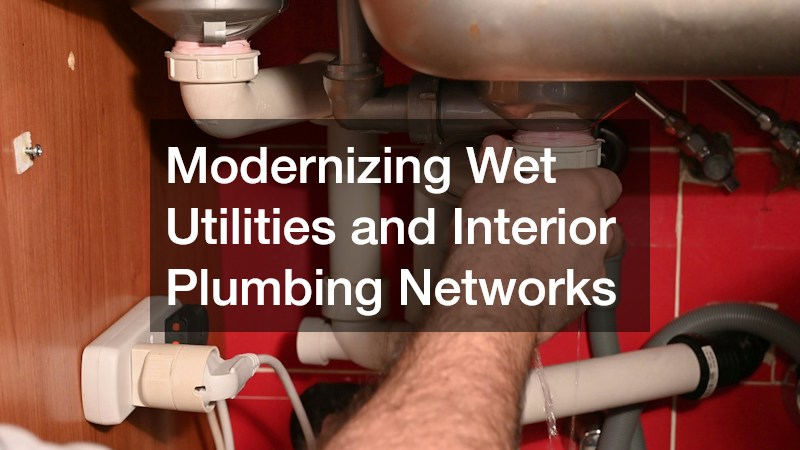
Plumbing infrastructure operates largely out of sight, yet it presents one of the greatest potential liabilities for water damage and structural degradation. From copper and PEX supply lines to cast-iron and PVC drain-waste-vent piping, indoor plumbing systems operate under constant pressure and dynamic thermal cycles. Over time, mineral scale, corroded fittings, and minor physical shocks can lead to hidden pinhole leaks and sewer back-ups.
Commercial properties, multi-family units, and older homes require routine plumbing assessments. Older galvanized steel lines often suffer from internal corrosion that constricts flow and turns water discolored, while aging drain lines can crack from shifting foundations or tree root invasion. Working with reputable local plumbers allows owners to identify aging valves, test backflow preventers, and verify that water heater temperature-and-pressure relief systems function safely under load.
Beyond water lines, modern properties need dependable standby electrical systems to safeguard continuous operations. Extreme weather events, grid instability, and seasonal ice storms can knock out utility power for hours or days at a time. Investing in turnkey generator services guarantees that your standby power systems, transfer switches, and fuel supply lines are properly sized, code-compliant, and ready to start automatically during a blackout. This backup power keeps sump pumps, refrigeration, and medical devices running without interruption.
-
Install automatic water shut-off devices: Place motorized mainline shut-off valves wired to moisture sensors beneath washing machines, water heaters, and sinks.
-
Test water heater safety valves: Manually lift the temperature-and-pressure relief valve lever once a year to ensure the valve seat has not frozen with sediment.
-
Exercise standby generators: Run backup generators under load on a scheduled monthly basis to circulate oils, charge starting batteries, and prevent fuel varnishing.
5. Pavement Longevity, Hardscaping, and Driveway Preservation
The paved surfaces surrounding a building—including parking lots, loading aprons, access roads, and driveways—represent a significant capital investment. Asphalt is a durable and cost-effective surface, but it is vulnerable to oxidation from sun exposure, surface damage from motor oil, and hydraulic degradation caused by the freeze-thaw cycle.
When water enters tiny surface fissures and freezes, it expands by approximately nine percent, forcing the crack wider and destabilizing the compacted gravel base beneath the pavement. Left unaddressed, these small gaps quickly develop into large potholes and alligator cracking. Performing prompt asphalt repairs through hot-pour rubberized crack filling, infrared patch repairs, and routine sealcoating prevents surface water from reaching the sub-base, adding years of service life to paved areas.
Industrial properties, manufacturing plants, and intermodal transport hubs often feature more than just asphalt paving; they connect directly with transport lines. Specialized railroad services are required for properties utilizing dedicated rail spurs, sidings, and grade crossings. Track maintenance teams perform ballast tamping, tie replacements, joint bar inspections, and rail alignment to ensure freight cars switch and unload safely without the risk of derailment or regulatory penalties.
-
Fill pavement cracks promptly: Treat any crack wider than a quarter-inch with hot-applied elastomeric crack sealant before winter arrives.
-
Clean chemical spills: Remove oil, hydraulic fluid, and gasoline spills immediately to prevent the petroleum compounds from breaking down the asphalt binder.
-
Inspect drainage catch basins: Clear debris from parking lot storm drains and rail spur culverts to prevent standing water from softening sub-base soils.
6. Powering Heavy Operations and Commercial Equipment
Properties supporting agricultural, earthmoving, material-handling, or transportation businesses rely on heavy industrial equipment to operate every day. When primary machinery breaks down, schedules slip, labor costs rise, and revenue stops.
Diesel-powered utility vehicles, excavators, high-tonnage tractors, and stationary pumping units require meticulous preventive maintenance. Diesel engines operate under high compression ratios and depend on clean, uncompromised fuel delivery systems. Securing specialized diesel engine repair services helps operators troubleshoot common-rail fuel injection problems, service turbochargers, and clean diesel particulate filters before exhaust backpressure damages internal engine components.
The heavy machinery used on industrial sites must be supported by sound facility planning. Heavy equipment sheds, wash bays, and storage yards require reinforced concrete slabs capable of bearing intense axle loads without cracking. Coordinating heavy fleet maintenance with general property upkeep ensures that service bays, crane hoists, and waste disposal systems remain organized, productive, and code-compliant.
-
Sample oil systematically: Send engine and hydraulic fluid samples for spectral analysis to detect bearing wear, metal shavings, and coolant contamination early.
-
Keep fuel delivery systems clean: Install high-efficiency fuel water separators on bulk storage tanks to protect sensitive high-pressure common rail systems.
-
Inspect hydraulic lines daily: Check hoses for weeping crimps, abrasion marks, and sun cracking to prevent sudden line ruptures under working pressure.

7. Managing Site Grading, Runoff, and Foundation Protection
Proper water management around a building’s perimeter is essential for protecting its structural foundation. Even well-engineered structures will suffer foundation settling, basement wall bowing, and chronic perimeter flooding if site topography directs roof and surface runoff toward foundation walls rather than away from them.
Maintaining healthy site drainage requires keeping the ground sloped away from the foundation at a minimum grade of six inches over the first ten feet. When landscaping shifts, soil erodes, or footpaths settle over time, this positive grade can flatten or reverse, directing surface water straight down exterior basement walls.
Installing French drains, catch basins, and underground downspout extensions directs bulk water safely into bioswales or municipal storm retention ponds. Regularly checking these drainage networks ensures that sub-surface lines do not clog with roots, leaves, or silt, which could cause perimeter flooding during intense seasonal storms.
-
Extend downspout outlets: Run gutter downspout pipes at least six to ten feet away from foundation walls to prevent soil saturation near footings.
-
Clear swales and ditches: Keep open drainage swales clear of tall weeds, fallen branches, and yard debris so runoff flows freely away from the site.
-
Inspect basement walls: Check interior foundation concrete for white, powdery efflorescence, which indicates that groundwater is pressing against the outer masonry.
8. Electrical Distribution and Safety Controls
A property’s electrical distribution network is responsible for powering climate equipment, industrial tools, commercial appliances, and life-safety systems. As buildings age and demand grows, electrical services can become overloaded if panels, breakers, and wiring paths are not upgraded to match higher power loads.
Preventive electrical maintenance begins inside the main breaker panel. Certified technicians use infrared thermography cameras to scan breaker terminals and busbars under full load, pinpointing loose connections and overloaded circuits as thermal hot spots long before wires burn or breakers fail.
Grounding and surge suppression are equally important for protecting modern electronics. Whole-building surge protectors installed directly inside the primary panel absorb transient voltage spikes from lightning strikes and utility switching, protecting circuit boards inside HVAC units, variable-speed well pumps, and computer equipment throughout the facility.
-
Schedule thermal inspections: Scan panels and motor contactor cabinets with infrared cameras every few years to identify high-resistance electrical connections.
-
Test GFCI and AFCI breakers: Press the manual test buttons on ground-fault and arc-fault breakers monthly to confirm that trip mechanisms operate freely.
-
Verify external grounding: Inspect the main copper grounding electrode and ground rod clamps outside the building to ensure they have not corroded or separated.
9. Comprehensive Building Envelope and Weatherproofing
A building’s envelope—the physical barrier separating the conditioned interior from the outdoor environment—includes windows, exterior doors, thermal insulation, wall cladding, and weather-resistant vapor barriers. A tight building envelope lowers energy usage, prevents drafting, and stops exterior moisture from damaging wall framing.
Over time, seasonal expansion and contraction will crack window caulking, compress door weatherstripping, and cause siding seams to open. Replacing worn perimeter sealants with high-grade elastomeric formulations stops air leaks and prevents wind-driven rain from penetrating window framing.
Upgrading wall and attic insulation reduces the thermal load on heating and cooling equipment. Checking insulation depths across attic spaces ensures the material has not compacted or shifted, keeping heating and cooling costs low and maintaining uniform temperatures across all interior rooms.
-
Renew window perimeter caulking: Strip away dried, peeling sealant around exterior window frames and apply high-performance polyurethane or silicone caulking.
-
Replace door sweeps: Install durable neoprene or brush sweeps along the bottom of exterior entry doors to eliminate air drafts and stop insect entry.
-
Inspect siding transitions: Check masonry weep holes, corner boards, and siding overlaps to ensure rain sheds cleanly away from wall sheathing.
10. Long-Term Capital Planning and Facility Recordkeeping
Caring for real estate successfully requires organized long-term planning and recordkeeping. Every component of a building has a finite working lifespan. For instance, roofing assemblies typically provide reliable protection for twenty to thirty years, while cooling and heat pump compressors usually need replacement between twelve and seventeen years of service. Similarly, deep well extraction hardware often operates for ten to fifteen years, paved asphalt surfaces require crack sealing every couple of years to achieve a full two-decade lifespan, and standby power generators remain dependable for fifteen to twenty years with regular maintenance. Tracking equipment ages and service histories helps property owners budget for replacements responsibly rather than reacting to sudden, costly breakdowns.
Creating a centralized maintenance archive is the most effective way to manage property systems. Keeping digital copies of equipment model numbers, serial tags, warranty documents, and contractor service receipts makes diagnosing issues faster and helps ensure warranty claims are honored when components fail early.
Developing a rolling multi-year capital replacement plan ensures you have cash reserves ready when big-ticket systems reach the end of their design life. Proactive replacement schedules prevent emergency shutdowns, protect cash flow, and ensure property operations remain smooth and predictable year after year.
-
Centralize digital records: Store receipts, equipment manuals, and system warranties in organized digital folders backed up to secure cloud storage.
-
Establish reserve accounts: Allocate a predictable percentage of annual property value into a dedicated capital expenditure reserve account.
-
Schedule multi-trade walk-throughs: Have trusted contractors review major building components every few years to confirm system health and update projected lifespans.
Managing real estate assets requires continuous attention, balanced priorities, and clear visibility into how different building systems depend on one another. By treating structural components, mechanical systems, heavy equipment, and utility networks as parts of a unified whole, property owners can protect their investments from premature wear and sudden failures. Implementing a disciplined maintenance plan keeps operating costs steady, preserves asset value, and ensures that every corner of the property remains safe, productive, and comfortable for the long haul.