A well-maintained outdoor property can make a home more enjoyable, functional, and easier to care for over time. While routine tasks such as mowing the lawn and clearing debris matter, larger improvements often have an even greater impact on how well an exterior space performs. Homeowners may eventually need to update landscaping, repair hard surfaces, improve drainage, replace fencing, remove problem branches, or rethink how different areas of the yard are used.
Taking a broader approach can also help homeowners prioritize projects based on safety, function, and long-term maintenance. Some improvements address immediate concerns, while others make the property more convenient or visually appealing. Understanding what each project involves can make it easier to create a realistic plan and avoid unnecessary rework. This can prevent conflicts between later improvement phases.
Start With the Overall Condition of the Landscape
Landscaping is often the most visible part of an outdoor property, but it also plays an important role in drainage, shade, privacy, soil stability, and ongoing maintenance. Before adding new plants or redesigning a yard, homeowners should evaluate what is already working and what may need attention.
Overgrown shrubs, bare patches, compacted soil, poor drainage, and struggling plants can all indicate that the existing landscape needs more than routine care. In some cases, backyard landscaping services can help homeowners create a more practical layout that considers sunlight, water flow, maintenance requirements, and how the space is actually used.
Homeowners should also consider how landscaped areas connect to walkways, patios, fences, and other structures. Grass that grows tightly against a fence can be difficult to trim, while flower beds placed too close to drainage paths may suffer from erosion. Coordinating these features from the beginning can help the yard remain easier to maintain.
Garden services may also be useful for homeowners who want more specialized care for planting beds, ornamental shrubs, seasonal flowers, or other cultivated areas. Routine garden maintenance can include pruning, soil improvements, mulching, weed management, and replacing plants that no longer perform well.
By starting with the overall landscape, homeowners can establish a foundation for the rest of their exterior improvements.
Build Hard Surfaces Around How the Property Is Used
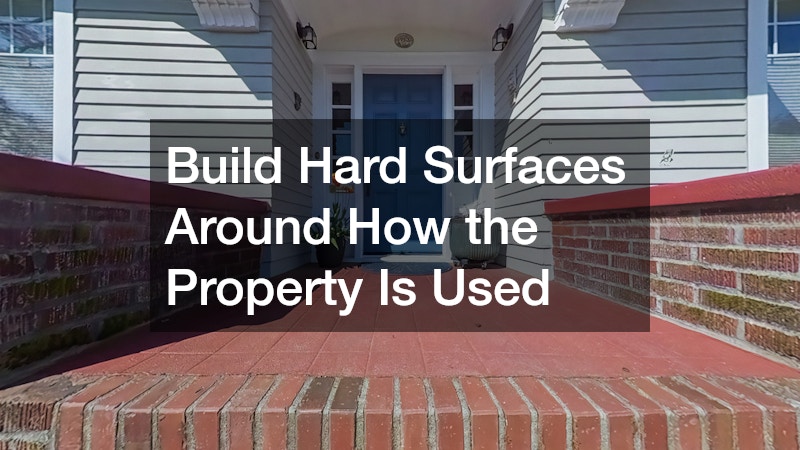
Hardscaping refers to the nonliving features of an outdoor space, including walkways, patios, steps, walls, edging, and other permanent surfaces. These elements can define how people move through the yard while also reducing the amount of lawn or garden space that requires regular maintenance.
When planning hardscaping services, homeowners should begin by considering how they use the property. A walkway should follow a natural route between frequently used areas instead of forcing people to take an inconvenient path. A patio should provide enough room for furniture without making the surrounding yard feel crowded. Steps should be positioned where elevation changes make them necessary and easy to navigate.
Drainage is another major consideration. Adding large areas of stone, pavers, or concrete changes how rainwater moves across the property. Water that once soaked into soil may instead run toward a house, garage, neighboring property, or low point in the yard. Proper grading and drainage planning can help prevent problems after construction is complete.
Hardscape projects should also complement the surrounding landscape. Planting beds can soften the appearance of large paved areas, while edging can help keep mulch, gravel, and soil from spreading onto walkways.
Thinking about circulation, drainage, appearance, and maintenance together can result in hardscaping that serves the property well for many years.
Address Slopes, Erosion, and Changes in Elevation
Uneven yards can create challenges that go far beyond appearance. Slopes may be difficult to mow, heavy rain can wash soil downhill, and changes in elevation can limit where patios, gardens, or play areas can be located.
A retaining wall can help manage certain sloped areas by holding soil in place and creating more defined levels within the landscape. Depending on the property, homeowners may use retaining structures to support planting beds, reduce erosion, create usable flat areas, or improve transitions between different elevations.
However, these structures require careful planning. Soil exerts significant pressure, especially when it becomes saturated with water. Drainage behind the wall is therefore an important consideration. Without a way for water to escape, pressure can build and contribute to leaning, cracking, or shifting.
Homeowners should also evaluate where runoff travels after the project is complete. Redirecting water away from one area can unintentionally create problems elsewhere. Drainage solutions such as gravel backfill, properly placed outlets, grading, or other systems may be needed depending on site conditions.
Addressing these issues before adding landscaping or recreational features can prevent future disruptions. It is far easier to correct grading and soil stability first than to remove recently installed plants, patios, or fences because underlying drainage problems were overlooked.
Create Outdoor Living Areas That Are Easy to Maintain
Outdoor living spaces can extend the usable area of a home, particularly during warmer months. Dining areas, seating zones, fire features, and gathering spaces can make a yard more functional while reducing the amount of open lawn that requires mowing.
Patio installations are often central to these projects because the patio provides a stable surface for furniture, grills, planters, and other outdoor features. Before installation, homeowners should consider size, placement, shade, privacy, drainage, and how people will travel between the patio and the house.
A patio positioned too far from the kitchen may be inconvenient for outdoor dining. One placed directly beneath trees may require frequent cleaning because of leaves, seeds, or sap. Areas exposed to intense afternoon sun might benefit from shade structures, umbrellas, or strategic landscaping.
The material selected can also affect both appearance and maintenance. Concrete, pavers, brick, and natural stone each have different installation requirements and long-term care needs. Homeowners should think about how the material handles weather, foot traffic, furniture, and seasonal temperature changes.
Larger concrete projects may also involve coordination with concrete delivery companies. Access to the installation area, the amount of material required, timing, and site preparation can all affect how smoothly the work progresses.
A thoughtfully designed outdoor living area should make the yard easier to enjoy without creating excessive upkeep.
Keep Fencing Functional, Attractive, and Secure
Fencing can serve several purposes at once. It may provide privacy, define property boundaries, help contain pets, protect gardens, or simply create a finished appearance around a yard. Because fences are constantly exposed to weather, however, routine inspections are important.
Wood fence installations remain popular because wood can complement many architectural and landscape styles. Homeowners can choose from a range of heights, board arrangements, post designs, stains, and finishes. The material can also be customized more easily than some prefabricated fencing systems.
Wood does require maintenance. Moisture, sunlight, insects, vegetation, and ground contact can all contribute to deterioration. Homeowners should periodically inspect posts for movement, boards for rot, fasteners for corrosion, and gates for alignment problems.
Minor repairs may extend the life of a fence when damage is limited to a few sections. In other cases, fence replacements may be more practical than repeatedly repairing an aging system. Widespread rot, leaning posts, extensive storm damage, or repeated structural problems may indicate that the fence has reached the end of its useful service life.
Landscaping around the fence deserves attention as well. Vines and shrubs growing directly against boards can trap moisture, while tree roots may shift posts or panels. Maintaining some separation between vegetation and fencing can help both features last longer.
Plan Carefully Before Adding a Swimming Pool
A swimming pool can dramatically change how a backyard is used, but it also affects landscaping, drainage, fencing, access, and long-term maintenance. Homeowners considering a pool should therefore evaluate the entire property rather than focusing only on the shape or appearance of the pool itself.
Local pool installers can assess site conditions and help homeowners understand factors such as available space, access for equipment, grading, underground utilities, and placement requirements. The location should also make sense in relation to the house, outdoor seating areas, and other backyard features.
Pool construction may require removing landscaping, adjusting drainage, modifying fencing, or creating new walkways. Planning these related improvements at the same time can produce a more cohesive finished space.
Homeowners should also think about how much surrounding deck or patio space they need. A pool that fills nearly the entire available area may leave little room for seating, storage, or safe circulation. On the other hand, excessive hardscaping can reduce green space and increase heat around the pool.
Privacy may influence decisions about fencing, trees, shrubs, and screening structures. However, homeowners should avoid planting trees too close to the pool because roots, falling leaves, seeds, and branches may create maintenance problems.
Considering these details early can help a pool become an integrated part of the backyard rather than a feature that conflicts with everything around it.
Maintain Trees Before They Become a Property Problem
Mature trees can provide shade, visual interest, privacy, and habitat for wildlife, but they also require periodic attention. Branches grow, storms cause damage, and trees can develop structural issues that may not be obvious from the ground.
Tree trimming can help manage dead, damaged, crowded, or poorly positioned branches. It may also improve clearance around roofs, utility lines, driveways, fences, and outdoor structures. Regular evaluation is particularly important when large limbs extend over areas where people frequently walk or gather.
Homeowners should avoid excessive pruning simply to make a tree smaller. Removing too much canopy can stress the tree and encourage weak growth. The goal should generally be to address specific concerns while preserving the natural structure whenever possible.
Trees also need to be considered when other outdoor projects are planned. Heavy equipment used during construction can compact soil around roots. Excavation for walls, patios, pools, or fencing may damage root systems. Changes in grading can also affect how much water reaches a tree.
Planning around established trees can prevent unnecessary damage. Contractors and homeowners should identify important trees before construction begins and determine where equipment, materials, and excavation will occur.
Keeping trees maintained helps protect both the landscape and the structures surrounding them.
Coordinate Projects to Reduce Future Maintenance
Outdoor projects often become more complicated when they are completed in the wrong order. Installing a new garden before major excavation, for example, could mean removing plants shortly afterward. Building a fence before deciding where a pool or patio will go may create access problems for construction equipment.
Homeowners can avoid many of these issues by creating a sequence for their improvements. Projects involving grading, excavation, drainage, or heavy equipment should generally be considered before delicate landscaping and finishing work.
A typical property improvement plan might begin with drainage and grading, followed by structural features such as walls or major hardscaping. Patios, fencing, and recreational features can then be coordinated around the new layout. Landscaping and garden work can often come later, once construction traffic has ended and final elevations are established.
Maintenance requirements should remain part of the discussion throughout the process. Every new feature adds some level of responsibility. Plants need care, patios need cleaning, fences require inspection, pools need routine maintenance, and trees continue growing.
The goal is not necessarily to create the most elaborate yard possible. Instead, homeowners should focus on building an outdoor environment that matches their lifestyle and the amount of maintenance they are willing to perform.
Well-planned outdoor upkeep combines appearance, safety, durability, and practicality. By thinking about backyard landscaping services, hardscaping services, garden services, retaining wall projects, patio installations, wood fence installations, fence replacements, concrete delivery companies, local pool installers, and tree trimming as connected parts of the property, homeowners can make better decisions about when and where to invest.
Taking time to evaluate the entire yard before beginning work can also reduce unnecessary expenses and disruptions. Improvements made in the right sequence are less likely to interfere with one another, while thoughtful material choices and realistic maintenance expectations can help new features remain useful long after installation. With a coordinated approach, homeowners can create outdoor spaces that are easier to care for, more functional, and better suited to how they want to use their property.